 Mitgliederbereich
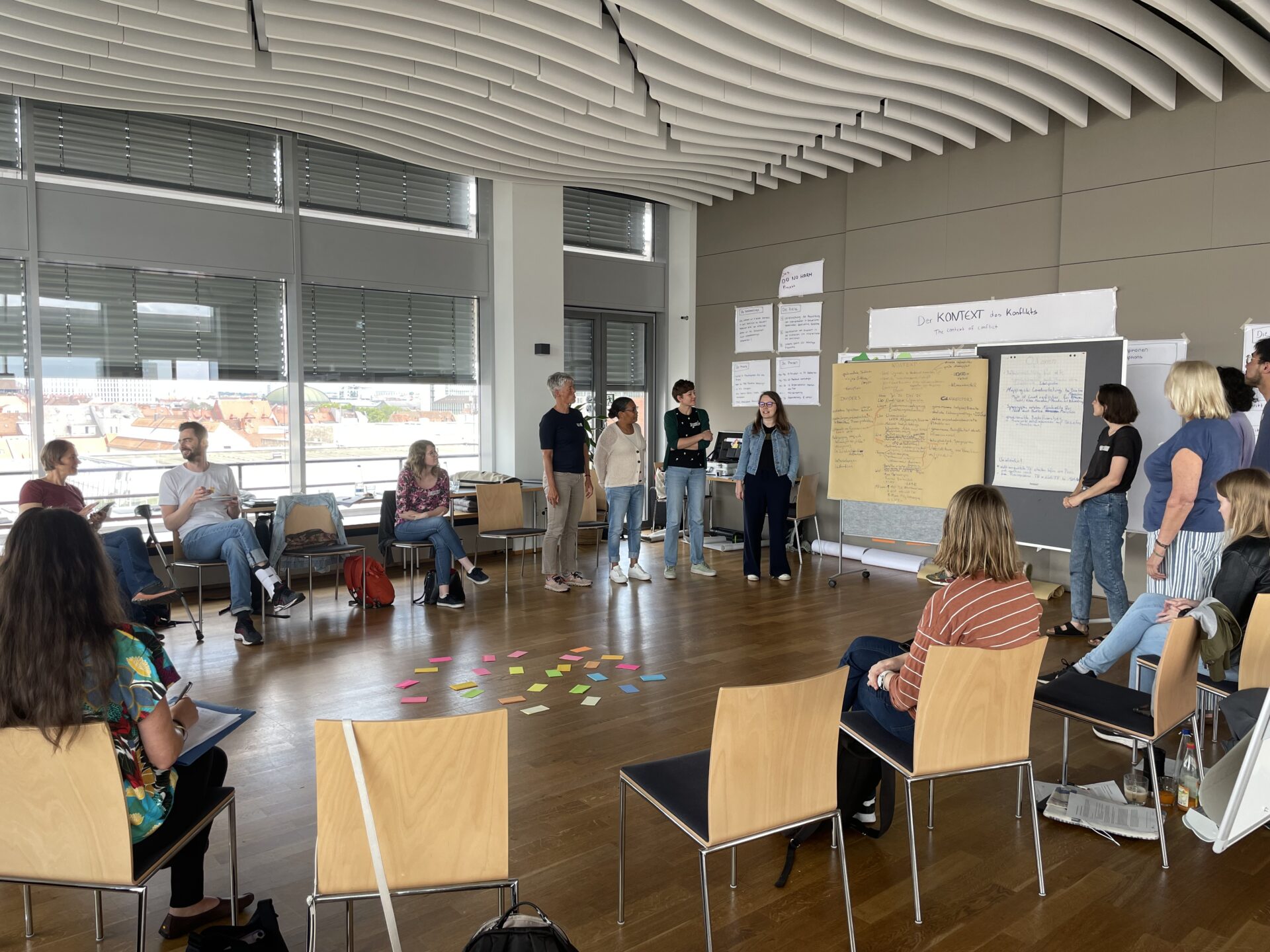
The concept of Do No Harm is widely used – but often remains superficial. A trainer and practitioner explores how this framework can be turned into more meaningful practice.
These reflections grew out of a recent VENRO online training on the Do No Harm (DNH) framework: Three half-day sessions, a handful of case studies, and a great deal of honest conversation. The participants came from across the aid sector. They were experienced, thoughtful, and genuinely engaged. And yet, as the sessions unfolded, three recurring tensions kept surfacing. Sometimes explicitly, sometimes quietly between the lines. Like an encouragement for deeper reflections. This blog article does not try to resolve those tensions. It sits with them for a while. Consider it food for thought, written in the spirit of a practitioner who believes deeply in the concept but refuses to be naive about what it asks of us.
1. More than a checklist: The case for a mindset shift
Let us be candid: Do No Harm has, for many organizations, become part of the professional furniture. Conflict-sensitive language appears in grant proposals. Dividers and Connectors are duly listed. A box is ticked. And then – often – very little changes in our general policy and practice.
This is not a criticism of individuals. It is a structural critique. When a framework designed to interrogate power, challenge assumptions, and fundamentally reorient how we work is reduced to a technical checklist – a donor requirement to satisfy rather than a practice to embody – something essential has been lost. The tools and the underlying thinking of DNH are genuinely useful; of that I am convinced. However, they are only as good as the orientation of the teams wielding them.
What DNH ultimately asks of us is not technical proficiency but a shift in worldview. It asks us to see our interventions not as neutral actions to reach a project goal. They are interventions into complex social ecosystems that will inevitably produce effects we did not intend. It asks us to hold that discomfort, to build it into how we design, implement, reflect, and evaluate. That is not the kind of change that happens in a training room. It requires organizations to move from what one framework calls a „Newtonian machine model“ – hierarchical, output-focused, control-oriented – toward something more adaptive and honest about uncertainty.
None of this is to say training is not valuable. It clearly is – the conversations in our sessions showed that. It is a crucial first step. Without an in-depth understanding of an approach, its underlying thinking, and the tools and reference frames it offers it is hard to explore its relevance and real value. But training alone cannot produce a mindset shift. That requires leadership, organizational culture, incentive structures, and a willingness to be genuinely uncomfortable. The question each of us might carry forward is: Does Do No Harm describe how I think about my work and act in accordance with this thinking, or merely how I write about it?
2. The structural challenge: Who is conflict sensitivity really for?
Here is the uncomfortable truth that rarely makes it into polite workshop discussions: If Do No Harm were taken seriously across the aid sector – not just by implementing Non-Governmental Organizations (NGOs) but by donors, multilateral institutions, and the political actors shaping the broader operational environment – it would require a significant redistribution of power and accountability. And that is precisely why it so often is not.
More than 25 years after Mary Anderson’s foundational work on Do No Harm, the honest assessment is that conflict sensitivity has achieved considerable conceptual success and rather disappointing operational impact, let alone structural rebalancing. It has been „mainstreamed“ – a word that, as several researchers have noted, has become so stretched as to be nearly meaningless. In practice, mainstreaming has often meant creating expert units whose analyses rarely reach operational teams, or embedding conflict-sensitive language into policies that do not change programming decisions, power dynamics, and ownership. Meanwhile, the pressure to disburse funds quickly, to demonstrate measurable outcomes, and to satisfy donor reporting cycles continues to work structurally against the kind of adaptive, context-led programming that DNH demands.
There is also a more fundamental challenge: The accountability structures of the aid sector largely flow upward – to donors, to headquarters, to institutional stakeholders – rather than downward to the communities and individuals programs are meant to serve. Genuine conflict sensitivity, by contrast, requires deep engagement with local knowledge, meaningful consultation with affected populations, and a genuine willingness to change course when analysis suggests harm is occurring. These are not things that can be grafted onto the current system without challenging some of its core assumptions.
What can individual organizations and teams do in the face of this? Probably more than we sometimes admit:
- Embedding conflict sensitivity into hiring criteria, performance systems, design standards, and organizational memory, rather than treating it as a parallel track maintained by a specialist team,
- creating internal „conflict sensitivity champions“ across departments, building trust with partners that honest reporting of problems will be met with learning rather than punishment, and
- making conflict analysis a visible input into strategic decisions rather than a background document.
These are achievable steps, even where the wider system remains resistant. The odds may be stacked against comprehensive change, but incremental and genuine change is both possible and worth pursuing.
3. What comes next: adapting Do No Harm to a changing world
The world in which DNH was developed – the early 1990s, the post-Cold War moment, a particular configuration of conflicts and local, national, and international actors – is not the world we inhabit now. The concept has held up remarkably well. But it also requires renewal.
Perhaps the most promising direction is what some practitioners and researchers are calling „peace responsiveness“ – a move from the essentially defensive orientation of Do No Harm (do not make things worse) toward a more proactive stance: How can all actors, not just those with an explicit peacebuilding mandate, actively contribute to social cohesion and resilience? This is not about blurring sectoral boundaries or asking every humanitarian worker to become a peacebuilder. It is about recognizing that all interventions have political dimensions, and that acknowledging this opens space for more intentional and potentially more constructive engagement.
Several other developments also seem important:
- The rise of climate-related conflict drivers – resource competition, displacement, state fragility linked to environmental stress – is changing the texture of many conflicts and demands new analytical frameworks.
- We are witnessing a collapse of a treaty-based order around us and a return to „might is right“
- The growing role of private sector actors in fragile and conflict-affected contexts raises questions about how conflict sensitivity principles translate beyond the NGO world.
- The increasingly prominent (if still insufficiently implemented) discourse around locally-led development challenges us to interrogate who defines what „harm“ means and whose knowledge and priorities shape the analysis.
Taking the concept to the next level probably requires not just updating its tools but genuinely further decentralizing the perspective from which those tools are designed – bringing in a variety of actors from a range of different backgrounds, with a multitude of perspectives as co-designers.
A closing thought
Do No Harm is, at its best, an invitation to honesty; honesty about the complexity of the contexts we work in, about the limits of our knowledge, and about the gap between our intentions and our impacts. That is not a comfortable invitation to accept. It is far easier to complete the framework, file the analysis, and move on.
But the conversations in our training sessions suggested that many of us are not satisfied with that. There is genuine appetite for something more: More honest, more adaptive, more accountable to the people we claim to serve. That appetite is, perhaps, the most important thing a training can produce – not mastery of a tool, but a productive dissatisfaction with how things currently work. And then find ways to improve.
The framework will keep evolving. So, I hope, will we.
You can find further information on Do No Harm in our publication on the topic and in our e-learning video.
VENRO regularly offers training courses on the Do No Harm approach and other topics relating to development project work. You can find an overview here.
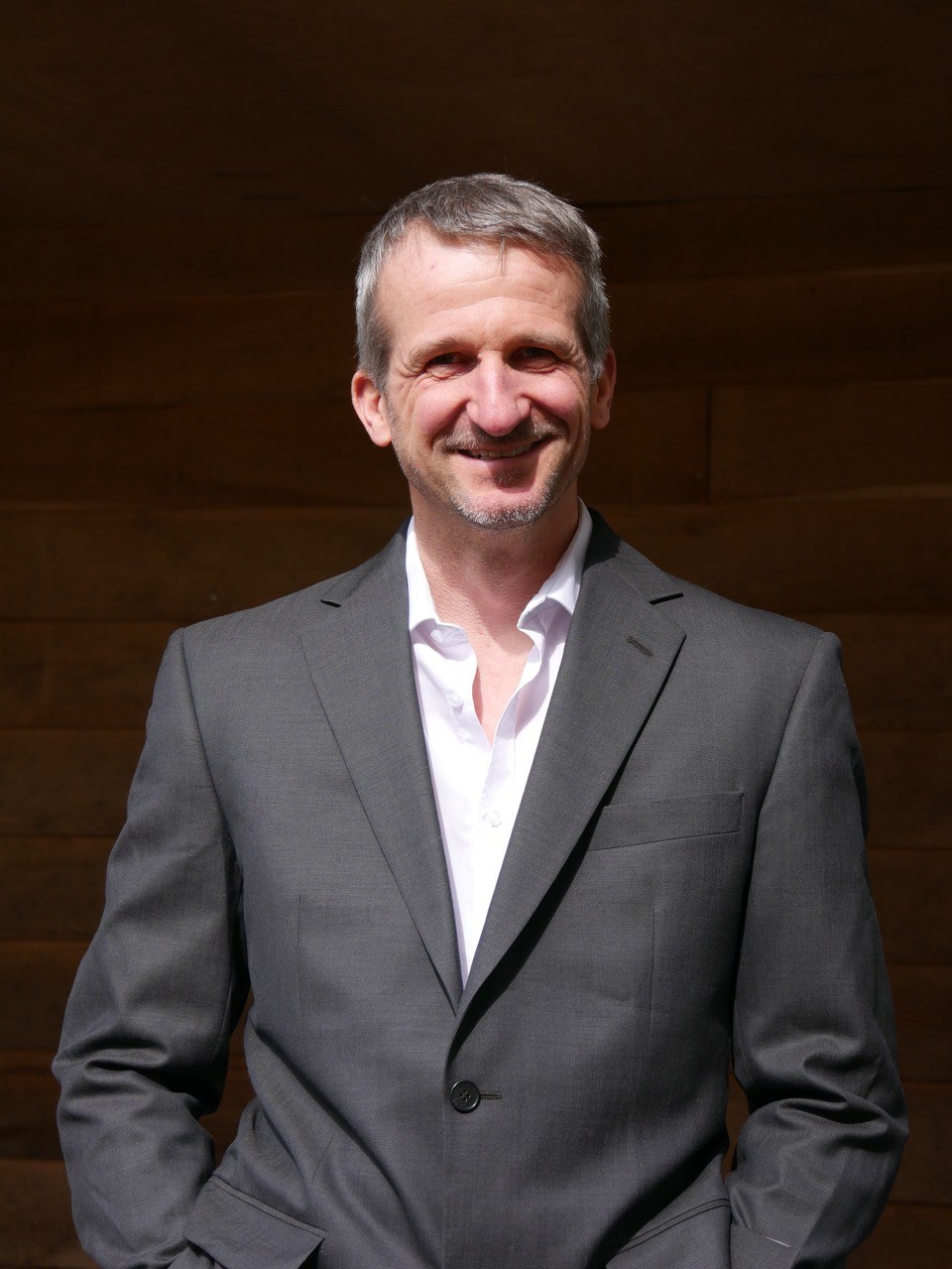
| Björn Eser |  |
Die Inhalte auf dem VENRO-Blog geben Meinungen und Einschätzungen unserer Autor_innen wieder. Sie können von abgestimmten VENRO-Positionen abweichen.