 Mitgliederbereich

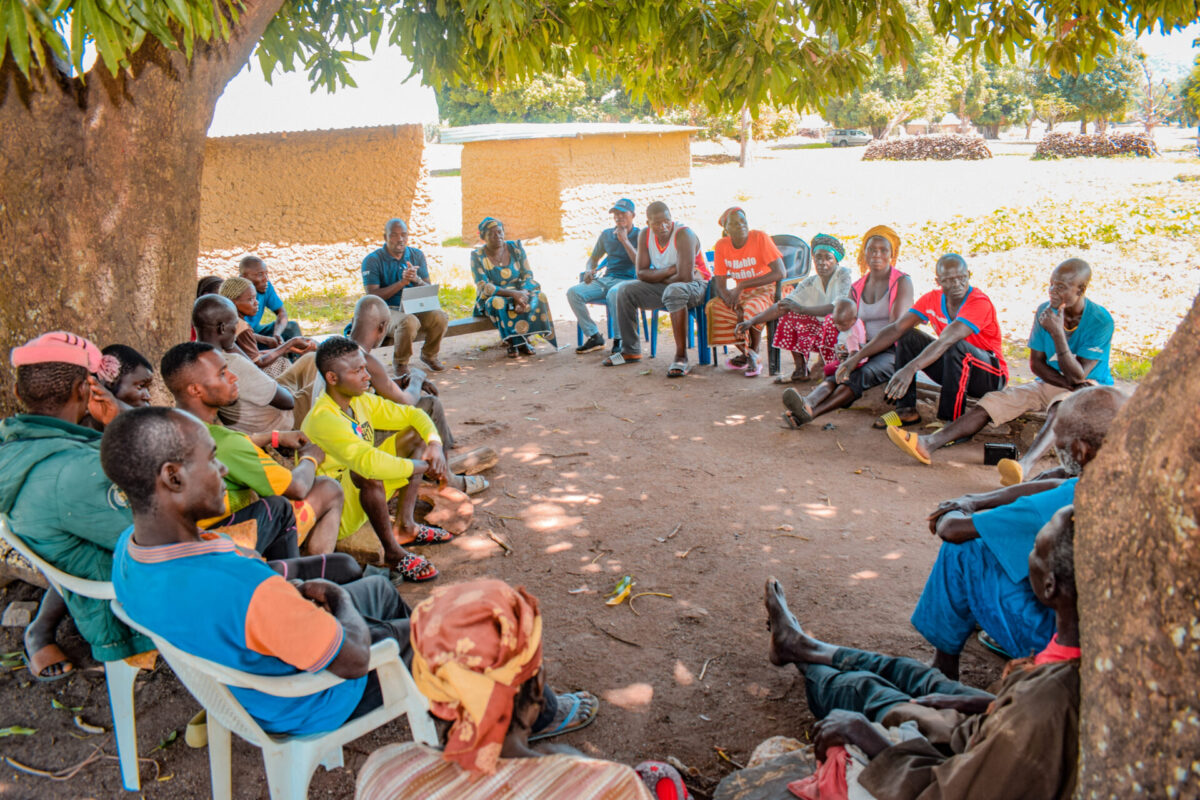
For years, the humanitarian sector has committed itself to making humanitarian action more locally led. Funding should reach local organizations more directly. Local actors should have a greater say in decisions. International structures should take a step back where national and local capacities exist.
The intention is often summarized in a simple phrase:
“As local as possible, as international as necessary.”
It is a compelling principle. But there is a problem hidden in the second half of the sentence: Who determines what is internationally necessary — and how?
Despite years of localization commitments, the basic architecture of the humanitarian system has changed remarkably little. International organizations still control much of the funding, coordination infrastructure, and strategic decision-making. Local organizations may increasingly implement humanitarian programs, while the institutions surrounding that implementation remain international.
Perhaps, then, we need to change the question. Instead of asking whether local actors can take over functions from international organizations, we should ask:
If a function can already be performed locally, why should it be performed or controlled internationally at all?
I call this Subsidiarity Reversal.
From “local first” to “capacity first”
Subsidiarity Reversal does not assume that local actors are inherently better. Nor does it imply that international humanitarian organizations are unnecessary. There are many situations in which international capacities are indispensable. During an Ebola outbreak, for example, international laboratory capacity, global supply chains, or highly specialized medical expertise may be required. International organizations can mobilize financing at scale, facilitate cross-border operations, absorb financial risks, or provide technical capacities that do not exist in a particular context. The relevant distinction is therefore not simply between local and international actors.
Which function needs to be performed at which level?
A response built around this principle would begin by identifying what already exists: state institutions, municipalities, civil society organizations, community structures, informal networks, and existing service providers. Only then would the remaining gaps be identified. International humanitarian action would be designed around those gaps. This reverses the usual perspective. Instead of constructing an international response and subsequently asking how local actors can participate in it, we would start with the existing response ecosystem and ask where additional international capacity is actually required.
That would give practical meaning to the phrase “as local as possible, as international as necessary.”
Localized delivery is not necessarily localized power
This distinction also exposes a weakness in how we often measure localization. Funding flows matter. But they tell us only part of the story. Consider a local organization that performs most of the operational work but receives tightly restricted project funding from an international organization. It cannot substantially alter the budget. It has limited influence over strategic priorities. Program design and key decisions remain elsewhere.
The response has localized its delivery. It has not necessarily localized its power.
We therefore need to distinguish at least three dimensions:
- Function: Who performs the humanitarian activity?
- Resources: Who controls the money required to perform it?
- Authority: Who determines priorities, strategy, and the design of the intervention?
These dimensions can move independently. This makes it possible to identify situations in which a function could demonstrably be performed locally but is nevertheless performed or controlled internationally. That does not automatically mean that international involvement is unjustified. It means that we should ask why it is necessary.
The residual necessity test
This requires a second question: What additional function does the international level provide? An international organization may provide access to global supply chains, absorb significant financial risks, mobilize resources that would otherwise not be available, provide specialized expertise or enable operations across borders. These are real functions and may provide strong reasons for international involvement. But where no such additional value can be demonstrated, we should be prepared to ask why functions, resources or decision-making authority remain internationally controlled. This changes the burden of proof. Local organizations should not have to continuously demonstrate that they can assume responsibility.
International actors instead should be required to explain why international control of a particular function remains necessary.
More focus on decision hierarchies
“But don’t we already do assessments?” one might ask. In principle, yes. Humanitarian responses already invest heavily in needs assessments, capacity assessments, stakeholder mapping, and response analysis. But these instruments often answer different questions.
A needs assessment asks what people need. A capacity assessment may determine whether an organization can implement a program or manage donor funding. Stakeholder mapping identifies which actors exist and what they are doing. They rarely answer the institutional question: Given the capacities that already exist, which functions actually need to be international?
Mapping existing capacity is not the same as making it the baseline for institutional design. A response can thoroughly assess local organizations and still construct an international architecture of coordination, financing, and decision-making around them. Subsidiarity Reversal therefore does not primarily call for another assessment. It calls for a different decision hierarchy following the assessment.
Once existing capacities have been identified, major response functions — implementation, coordination, financing, technical support, information management, and strategic decision-making — should face a simple test: Can this function be performed sufficiently at a lower level? If yes, it should normally remain there. If a gap remains, it should define the international role. The assessment therefore does not end with a description of local capacity. It informs the allocation of functions.
The problem with the “best placed actor”
There is another apparent answer to this problem. Humanitarian organizations often argue that a function should simply be performed by the best placed actor. That sounds sensible, but it contains a potential circularity. The response design often directly affects the question of who is best placed.
Imagine that an international organization enters a crisis-affected context, mobilizes substantial funding, recruits staff, establishes information systems, develops relationships with donors and authorities, and assumes responsibility for a particular function. Six months later, an assessment may quite reasonably conclude that this organization is now the best placed actor to perform that function. That conclusion may even be correct. But it does not answer a more fundamental question:
Was the organization best placed before the response architecture made it so?
This is a problem of path dependency. If existing capacity is insufficiently considered at the beginning of a response, international actors can accumulate resources, information and institutional authority that progressively strengthen their position relative to existing organizations and institutions. The resulting assessment can then validate an institutional arrangement that the response itself helped to create. In its most extreme form, the reasoning becomes circular:
International actors assume a function because they are considered best placed — and become best placed because they assumed the function.
The “best placed actor” principle therefore needs a baseline. Before asking who is best placed to perform a function today, we should ask who could perform it before international substitution occurred — and which additional capacities were genuinely missing. This does not mean freezing responsibilities at the beginning of a crisis. Local capacities can be overwhelmed. International capacities can become necessary. Conditions can deteriorate or improve. Responsibilities should therefore be reassessed over time. The point is to establish a baseline against which those changes can be understood.
From localization to institutional design
Subsidiarity Reversal therefore asks us to move the localization debate one step further. The question should no longer only be:
“How can we better integrate local actors into the international humanitarian system?”
It should also be:
“What can the existing response ecosystem already do — and which remaining functions genuinely require international capacity?”
This would not remove international humanitarian organizations from crisis response. It would require them to become clearer about the specific value they add. The burden of proof shifts from local capacity to international necessity. And perhaps that is exactly what the localization principle has always implied:
As local as possible, as international as necessary.
| Kayu Orellana |  |
VENRO |
Die Inhalte auf dem VENRO-Blog geben Meinungen und Einschätzungen unserer Autor_innen wieder. Sie können von abgestimmten VENRO-Positionen abweichen.