 Mitgliederbereich
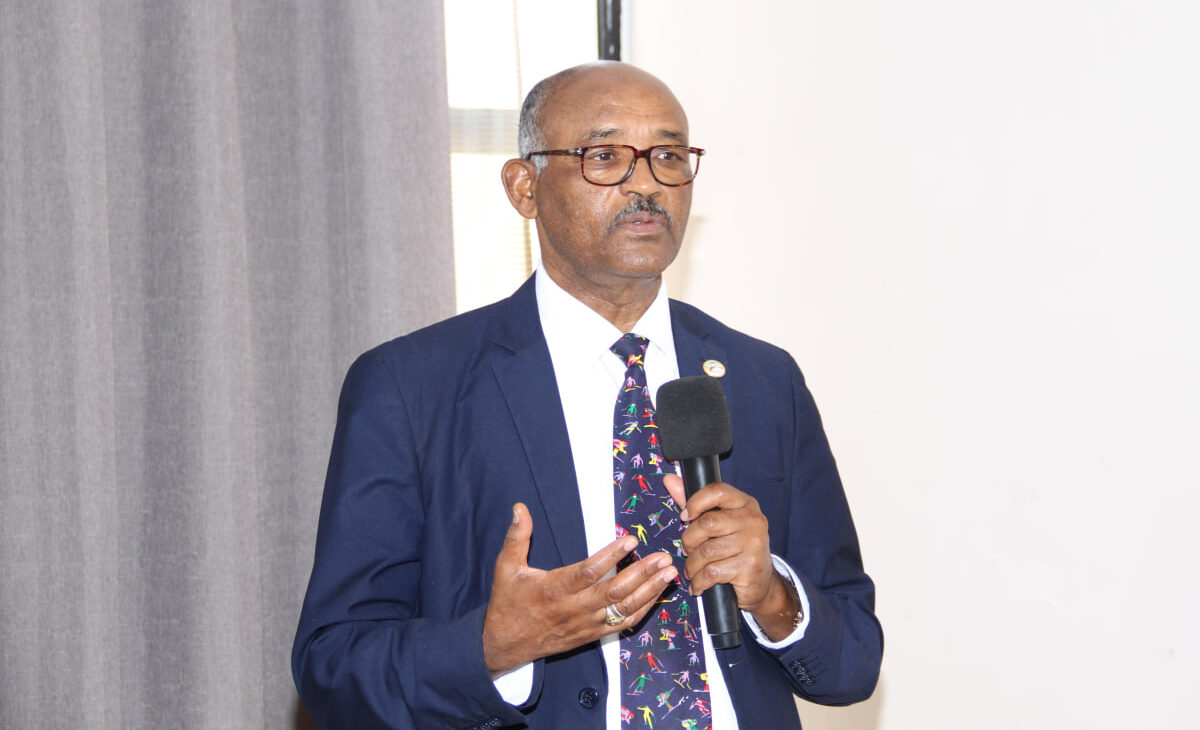
Negotiations on the future of the 2030 Agenda will begin at the 2027 SDG Summit. Nigussu Legesse, Executive Director of our Ethiopian partner network CCRDA, is calling for an agenda that promotes a global environment which supports nationally driven development pathways and is more closely aligned with national realities. His priority is to ensure that the principle of Leaving No One Behind remains a central principle of a new agenda.
What is the most important aspect for the Agenda 2030 follow-up process?
From Ethiopia’s perspective, the most critical priority for the Agenda 2030 follow-up process is the effective localization and contextualization of the Sustainable Development Goals (SDGs) within fragile, climate-affected, and resource-constrained settings.
While the SDGs are universally relevant, their implementation must be anchored in national realities. In Ethiopia’s case, this requires a deliberate alignment of SDG follow-up mechanisms with peacebuilding efforts, humanitarian response, and long-term structural economic transformation. The convergence of climate shocks, socio-economic vulnerabilities, and recent conflicts has underscored the necessity of adopting a nexus approach—one that bridges emergency interventions with resilience-building and sustainable development.
Equally important is ensuring that the follow-up process is not merely a reporting exercise, but a transformative accountability framework that strengthens institutional coordination, empowers local actors, and enables evidence-based policymaking. Without meaningful localization, the global ambition of Agenda 2030 risks remaining disconnected from the lived realities of communities most at risk of being left behind.
Which principles should be included in the next Agenda?
Building on the lessons learned from Agenda 2030, the next global development framework should be guided by a set of interlinked and forward-looking principles:
Leaving No One Behind (LNOB) and Equity: This principle must remain central, with stronger operational mechanisms to reach the most marginalized, including those in conflict-affected and climate-vulnerable areas.
Integration of Peace, Development, and Humanitarian Action: Sustainable development cannot be achieved without peace; therefore, the next Agenda must explicitly recognize and operationalize the peace-development-humanitarian nexus.
Climate Justice and Environmental Sustainability: Beyond resilience, there is a need for a justice-oriented approach that recognizes differentiated responsibilities and supports green and inclusive transitions in developing countries.
Inclusive and Transformative Economic Growth: Structural transformation, decent job creation, and support for domestic industries should be prioritized to reduce dependency and foster self-reliance.
Gender Equality and Social Inclusion: A rights-based and intersectional approach is essential to ensure meaningful participation and empowerment of women, youth, and marginalized groups.
Digital Transformation and Innovation: Bridging the digital divide and leveraging technology for development should be recognized as a key enabler across all sectors.
Sustainable and Equitable Financing: The principles of the Addis Ababa Action Agenda should be reinforced, with stronger commitments to fair, predictable, and accessible financing for developing countries.
Decoloniality, Participation, and Transparency: The next Agenda must be shaped through inclusive, bottom-up processes that genuinely reflect the voices and priorities of the Global South, moving beyond tokenistic engagement.
Together, these principles should guide the transition toward a more just, resilient, and future-oriented global development architecture.
What are your demands for policymakers and governments regarding the Agenda 2030 follow-up process?
Ethiopia’s key demands for policymakers and governments center on enabling an equitable and enabling global environment that supports nationally driven development pathways.
First, there is an urgent need for enhanced, predictable, and accessible development finance. This includes scaling up concessional financing, addressing debt vulnerabilities, and ensuring that financial flows align with national priorities. For countries like Ethiopia, sustainable development cannot be achieved without addressing structural financing gaps.
Second, climate finance must be significantly increased and delivered in a fair and transparent manner. Ethiopia and many African countries contribute minimally to global emissions yet bear a disproportionate burden of climate impacts. Access to adaptation and mitigation financing must therefore be simplified and scaled up to support green growth transitions.
Third, we emphasize the importance of policy space and national ownership. Global frameworks should enable countries to design and implement context-specific solutions without undue external constraints, while also strengthening domestic institutional and technical capacities.
Fourth, there is a strong call to operationalize the humanitarian-development-peace nexus within the follow-up process. This includes investing in resilience-building systems that reduce vulnerability to recurrent shocks.
Finally, from a regional perspective, Africa calls for a rebalancing of global governance structures to ensure fair representation and voice in decision-making processes related to development finance, climate policy, and global economic governance.
These priorities have been consistently echoed in regional and global platforms, including recent African and international development forums, and reflect a shared aspiration for a more equitable, inclusive, and accountable global development system.
Dr. Nigussu Legesse is Executive Director of our Ethiopian partner network Consortium of Christian Relief and Development Association (CCRDA). Find out more about our partners and our common project ‚Countdown 2030‘ here.
| Interview |  |
Die Inhalte auf dem VENRO-Blog geben Meinungen und Einschätzungen unserer Autor_innen wieder. Sie können von abgestimmten VENRO-Positionen abweichen.